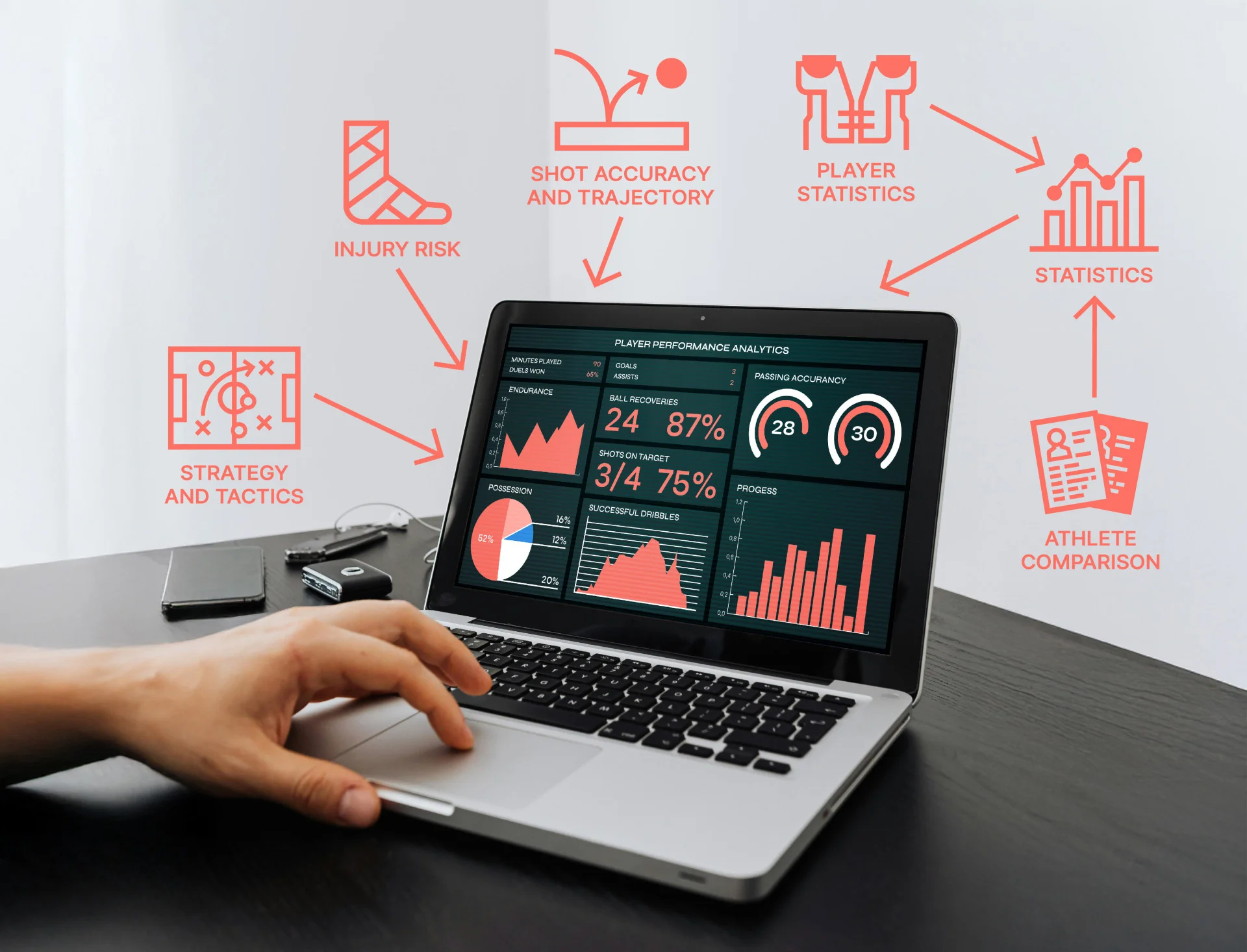
How Data Analytics Is Changing Sports Strategy & Performance Optimisation
From wearable sensors sewn into training kits to high‑speed multi‑camera rigs capturing every stride on the pitch, modern sport has become a torrent of numbers. Clubs and federations increasingly rely on quantitative insight to refine tactics, prevent injuries and maximise revenue streams. Aspiring analysts keen to enter this arena often build foundational skills through a data analyst course, mastering statistics, coding and data‑storytelling techniques that translate raw observations into winning decisions.
1.The Evolution of Sports Analytics
Two decades ago, strategy decisions rested on anecdotal coaching wisdom and limited box‑score metrics. Today, multi‑modal datasets,positional coordinates, biometric readings, micro‑event logs,feed pipelines that model space usage, predict scoring probabilities and assess player efficiency in real time. Iterative feedback loops allow insights to influence substitutions within minutes, blurring the boundary between analysis suite and touchline.
2.Data Capture: From Pitch to Cloud
Stadiums now function as IoT ecosystems. Optical‑tracking systems record x‑y‑z coordinates at 25 frames per second, while inertial‑measurement units capture acceleration, rotation and impact forces. High‑definition microphones log ball strikes for spin‑rate estimation. Cloud‑native ingestion streams these terabytes into time‑series databases, where automated quality checks flag outliers and synchronise feeds. Rich metadata,match phase, weather or playing surface,enrich each record, enabling context‑aware modelling downstream.
3.Predictive Modelling for Tactical Edge
Coaches no longer rely solely on video review. Gradient‑boosted trees and recurrent neural networks estimate expected goals (xG) for every on‑ball action, helping staff allocate training focus to high‑leverage patterns. Spatial pressure maps quantify how quickly defenders close passing lanes, guiding press‑intensity drills. Professionals keen to prototype such models frequently enrol in a data analyst course in Bangalore, where capstone projects exploit spatio‑temporal datasets from local leagues, bridging theory with regional sporting contexts.
4.Load Management and Injury Prevention
Accumulated fatigue remains a silent performance killer. By merging training‑load metrics,distance run, sprint count, heart‑rate variability,with recovery indicators like sleep quality, analysts build survival models that forecast injury‑risk windows. Dashboards recommend micro‑cycle adjustments or scheduled rest, extending athlete longevity and preserving squad depth during congested fixtures. Transparent communication with medical staff ensures model findings translate into actionable conditioning protocols.
5.In‑Game Decision Support Systems
Edge‑AI servers stationed pitch‑side process tracking feeds locally, generating heat maps, pass networks and player‑rotation alerts within seconds. Coaches receive tablet notifications suggesting formation tweaks or potential overload zones. Bayesian win‑probability models update after every event,fouls, corners, substitutions,helping analysts weigh the risk‑reward of tactical gambits such as high pressing when leading late in matches.
6.Talent Identification and Scouting
Recruitment departments now augment traditional observation with algorithmic shortlists. Clustering algorithms group prospects by playing style, physical attributes and progression curve, surfacing undervalued talent in lower divisions. Transfer‑value models integrate contract length, age and performance analytics to project resale value, supporting evidence‑based negotiations. These insights democratise scouting, enabling resource‑constrained clubs to compete strategically against wealthier rivals.
7.Broadcast, Fan Engagement and Commercial Strategy
Beyond the touchline, data science personalises supporter experiences. Recommender systems suggest highlight clips tailored to viewing habits; dynamic pricing engines adjust ticket offers based on demand elasticity, weather and opponent stature. Synthetic‑camera angles rendered from tracking data enrich broadcasts with never‑before‑seen perspectives. Upskilling programmes, such as an advanced data analyst course, include modules on segmentation and revenue optimisation, preparing analysts to maximise commercial returns without eroding fan goodwill.
8.Officiating and Fair‑Play Enhancements
VAR systems leverage advanced computer vision technologies and sophisticated triangulation algorithms to provide highly accurate offside rulings with centimeter-level precision. These systems analyze live video feeds to determine the exact position of players in real-time, significantly reducing incorrect calls and enhancing the fairness of the game. Additionally, real-time foul-probability models are employed to aid referees by identifying and flagging high-risk tackle patterns, thereby helping to prevent severe injuries on the field.
These predictive models actively analyze various factors such as force, angle, and proximity to the player, allowing for quicker and more informed decision-making. Furthermore, the integration of wearable technology with VAR systems ensures biometric compliance by monitoring players’ vital signs and physical conditions. This capability is especially crucial during high-temperature fixtures, where maintaining players’ health and safety is paramount. Overall, these technological advancements are transforming officiating standards, promoting player safety, and ensuring fairness in competitive sports.
9.Challenges and Ethical Considerations
Despite its promise, sports analytics faces hurdles. Data‑privacy laws dictate how biometric information may be stored and shared, requiring robust governance frameworks and anonymisation pipelines. Models over‑fitted to past seasons risk strategic stagnation if the competitive environment evolves; cross‑validation over multiple leagues guards against this trap. Transparent communication with players and agents fosters trust, while periodic audits verify that algorithms do not reinforce selection bias or disadvantage under‑represented groups.
10.Future Horizons: Edge AI, AR and Beyond
Emerging technologies promise even richer insights. Edge‑AI chips embedded in wearables could deliver sub‑second feedback on muscle‑activation patterns; augmented‑reality glasses may overlay tactical suggestions during training drills. Quantum‑inspired optimisation could solve complex fixture scheduling and travel planning, reducing fatigue and carbon footprints. Collaboration between data scientists, sports psychologists and biomechanists will unlock the full potential of these innovations.
Conclusion
Data science has transformed sport from a realm of anecdotal wisdom into a test bed of empirically validated strategy. Whether fine‑tuning formations, safeguarding athlete health or deepening fan engagement, analytics provides a competitive moat that savvy organisations can no longer ignore. Professionals armed with structured learning,beginning with a data analyst course in Bangalore and reinforced by ongoing experimentation,stand poised to drive the next wave of performance optimisation, ensuring that every pass, sprint and substitution is informed by the power of data.
ExcelR – Data Science, Data Analytics Course Training in Bangalore
Address: 49, 1st Cross, 27th Main, behind Tata Motors, 1st Stage, BTM Layout, Bengaluru, Karnataka 560068
Phone: 096321 56744












Post Comment